The Day Cholera’s Mystery Was Unveiled
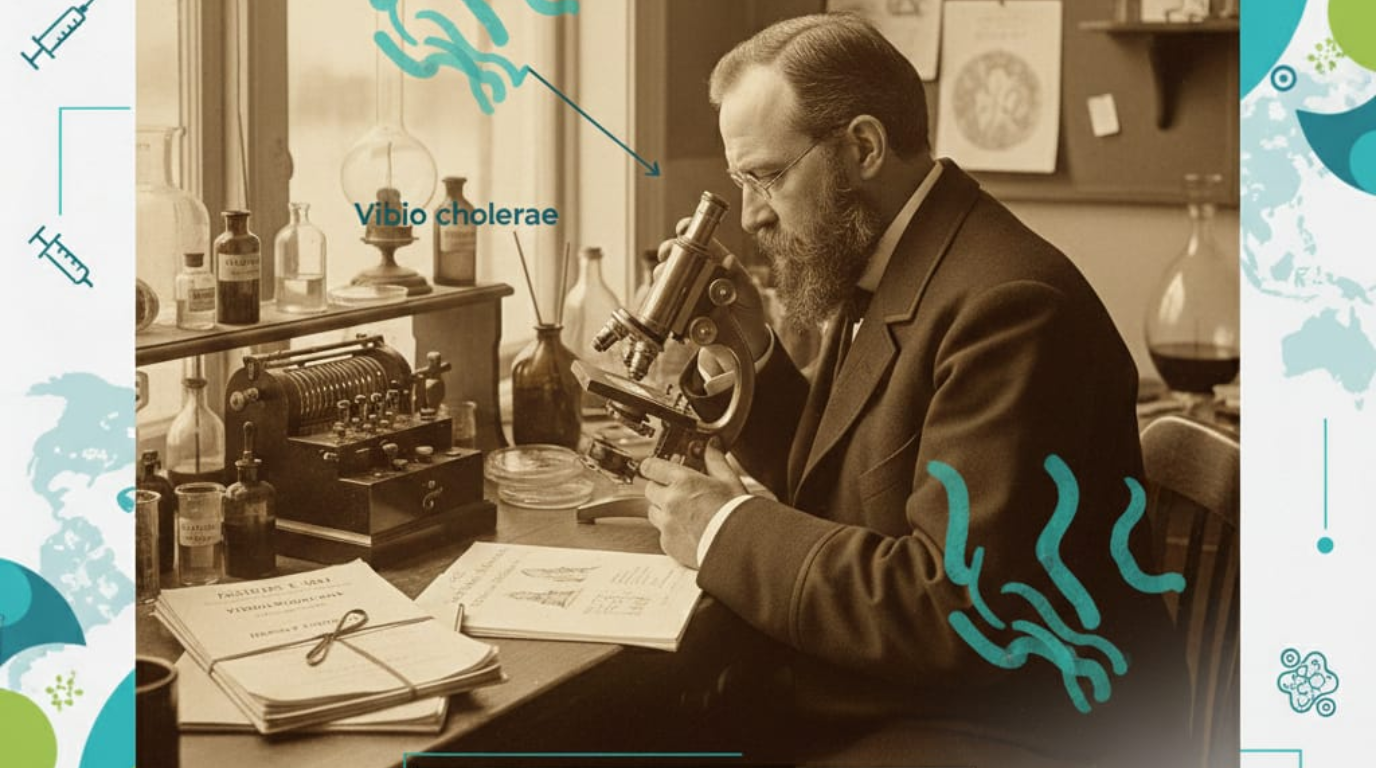
On February 2, 1884, one of the defining moments in the history of microbiology took place.
On this day, Robert Koch, the father of modern bacteriology, sent an official report from Calcutta to the German Ministry of the Interior, declaring that the curved bacillus he had isolated from the intestines and stool of cholera victims was the true causative agent of cholera: Vibrio cholerae.
Koch’s announcement was far more than a laboratory observation;
it marked the beginning of a new era in waterborne disease control, infectious disease diagnostics, and the scientific foundation of global public health.
His discovery shifted cholera from mystery to measurable science, paving the way for the development of oral cholera vaccines, modern outbreak response strategies, and evidence-based epidemiology that continues to save millions of lives worldwide.
"As part of the ICVV Microbiology Calendar, we honor this historic milestone—a reminder that every breakthrough in pathogen identification can spark generations of progress in immunology, vaccine development, and disease prevention."